I am constantly seeking out new and innovative ways to engage my students and enhance their learning. While designing a social studies unit on the history of the United Arab Emirates for my students in grade 3, I realized the crucial role of timelines in teaching about historical events.
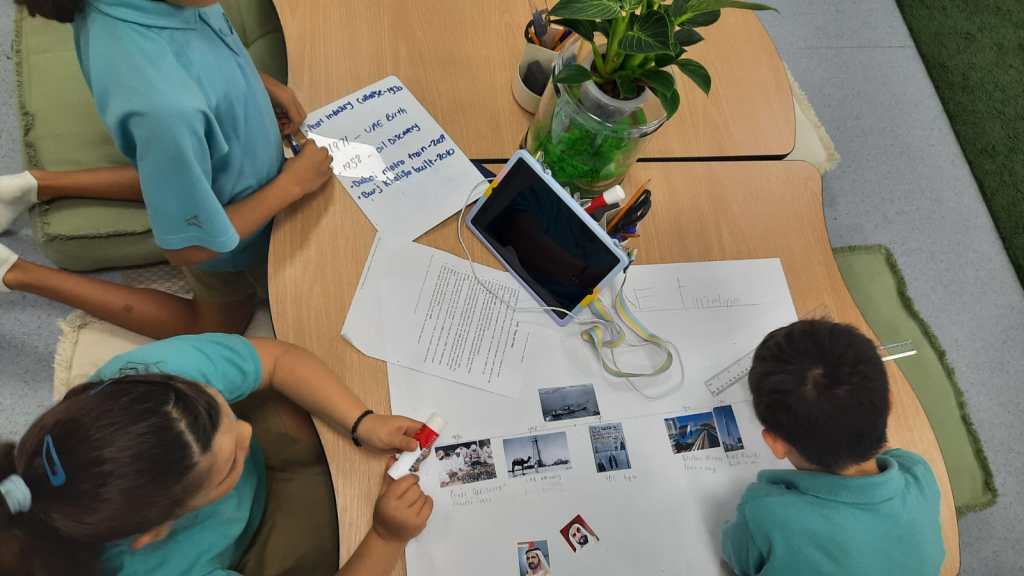
Why Timeline is a powerful visual tool?
When it comes to teaching history, timelines are a game-changer. They go beyond the ‘who’ and ‘when’ (memorization of dates and facts of historical events) and help children understand the bigger picture – the ‘what’ and ‘why’ (Breakstone et al., 2013). They provide a basic chronological framework to events that enable students to analyse the cause and consequence, chart the process of change and continuity, and relate different pieces of information.
But that’s not all. Timelines are also a fantastic way to connect learning to the local culture and context. It is an opportunity to show how the country has evolved over time. Plus, they offer endless possibilities for integrating various subjects and skills, such as reading comprehension and math. Non-fiction text can be used to extract information and develop comprehension by creating timelines. Timelines can help students learn identify important events, arrange them chronologically, and compare and contrast them. These abilities promote critical thinking, organization, and decision-making, applicable to various situations beyond the history classroom.
Setting the Scene
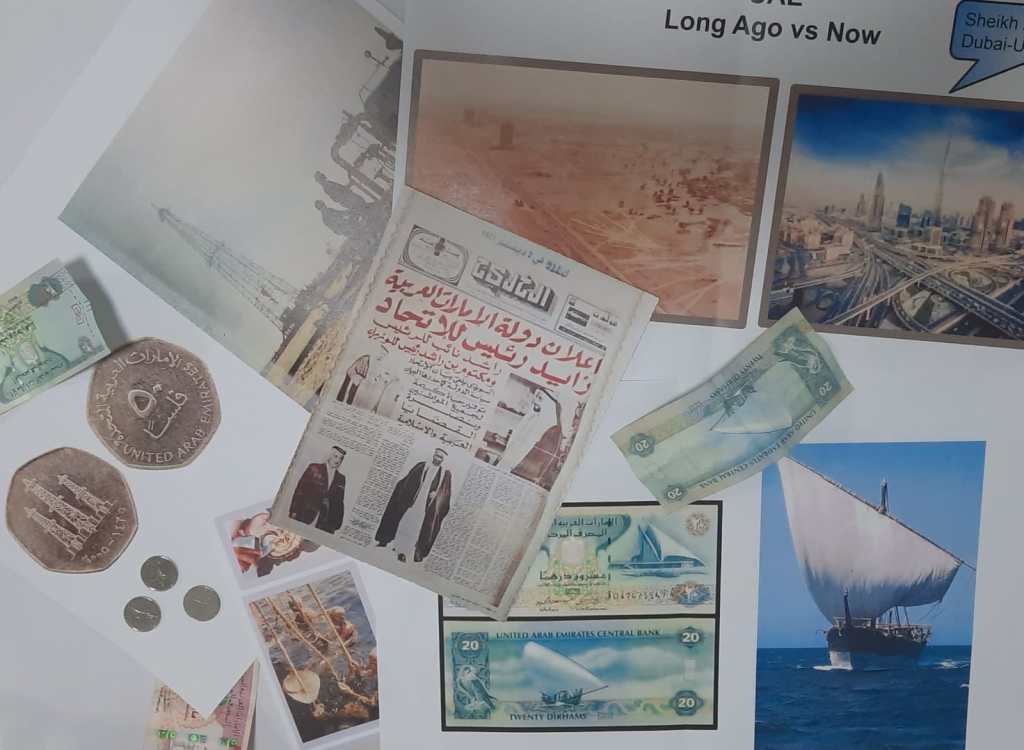
To uncover the history of UAE at the beginning of the unit, I wanted the students to start thinking like historians and help them develop a “historical approach”; get them to really dive deep into the context and time period of the country’s history. I made sure that my students had access to all sorts of primary resources like old newspaper clippings, photographs, videos, maps, and even the country’s currency notes.
The Lessons
The first lesson of the unit focused on visualization of the growth and development of the country over time. As the children explored the videos and photographs, their curiosity, empathy and gratitude were ignited. One student remarked, “Oh! So that’s what the first school in the country looked like! My school looks so colourful and better!” while another asked, “Why aren’t the people using the latest technology like scuba diving suits and cylinders to dive for pearls?” The third student empathized, “The people in the past did so much hard work to survive.”
During the second lesson, we focused on developing the ability to compare and contrast different time periods and be able to record various dates. Students compared photographs of the “then” and “now” to analyse how things have changed over time. Now here comes the exciting part, I used mine and the children’s year of birth to contextualize the events that took place in UAE’s history. The discussion on decades and centuries erupted; we learnt that the tallest building in the world, Burj Khalifa, was built just three years before they were born, and their teacher was born only 12 years after UAE was formed. The gleaming eyes around the classroom were a delight!
In our third lesson, we brainstormed and shared ideas about how to organize, record, recall, and retain all the valuable knowledge we gained from exploring multiple sources, like photos, written texts, and videos accessible through QR codes on their iPads. With so much information available, I prompted the students to think about how to keep track of it all!
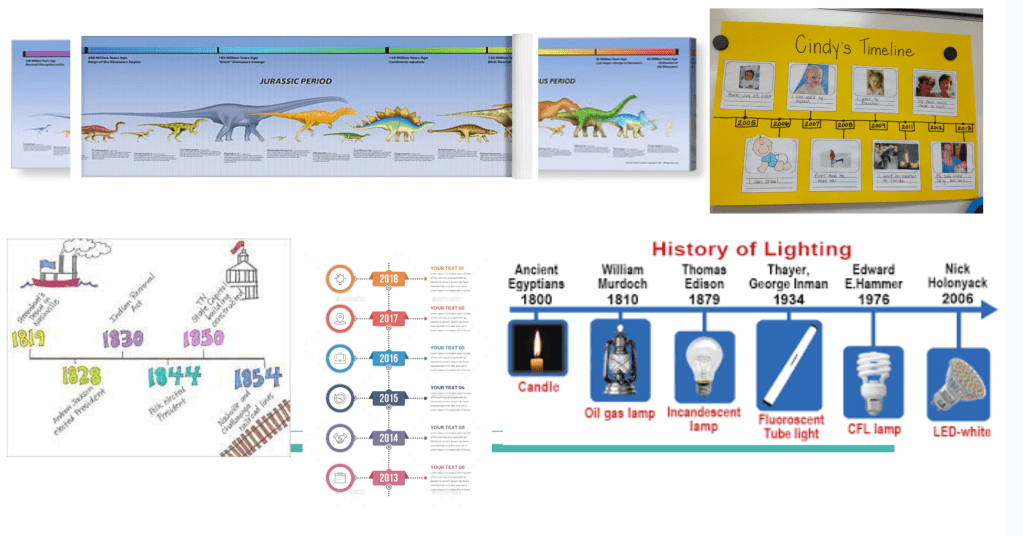
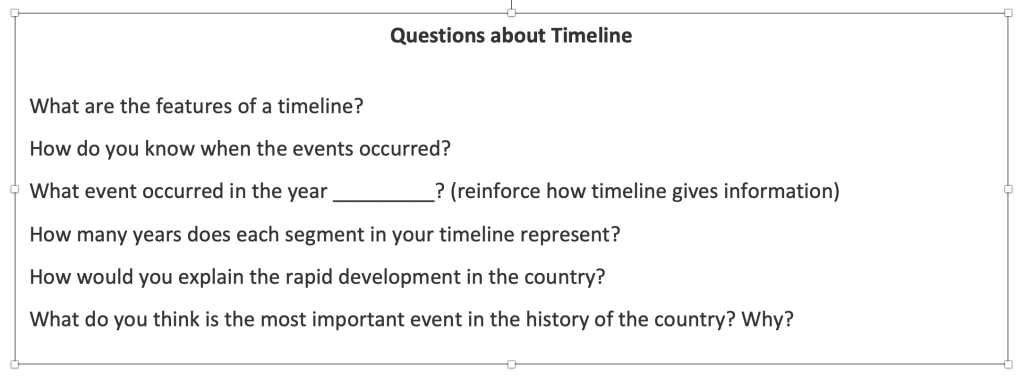
Next up, we explored different timelines throughout history, like the timelines of dinosaurs and light bulbs. The children chatted with their partners about what they thought were the key features of a timeline and then together we created a timeline of a child’s life from birth on a flipchart. This exercise helped the children understand the key components of a timeline and develop a set of success criteria for creating their own timelines in the future.
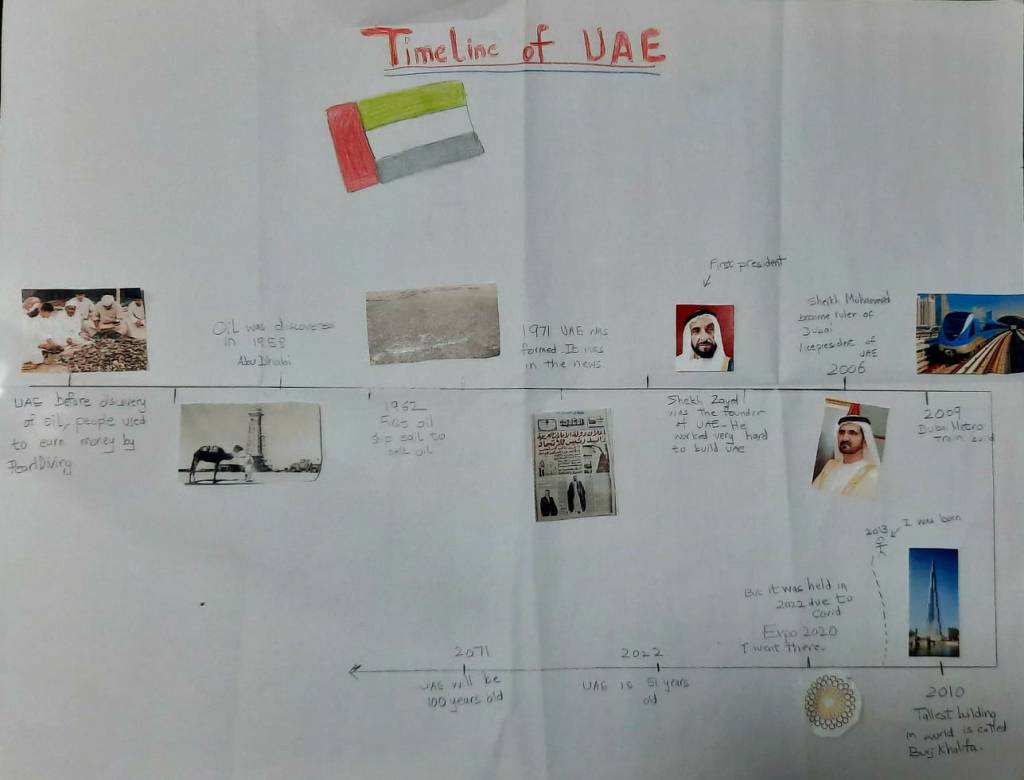
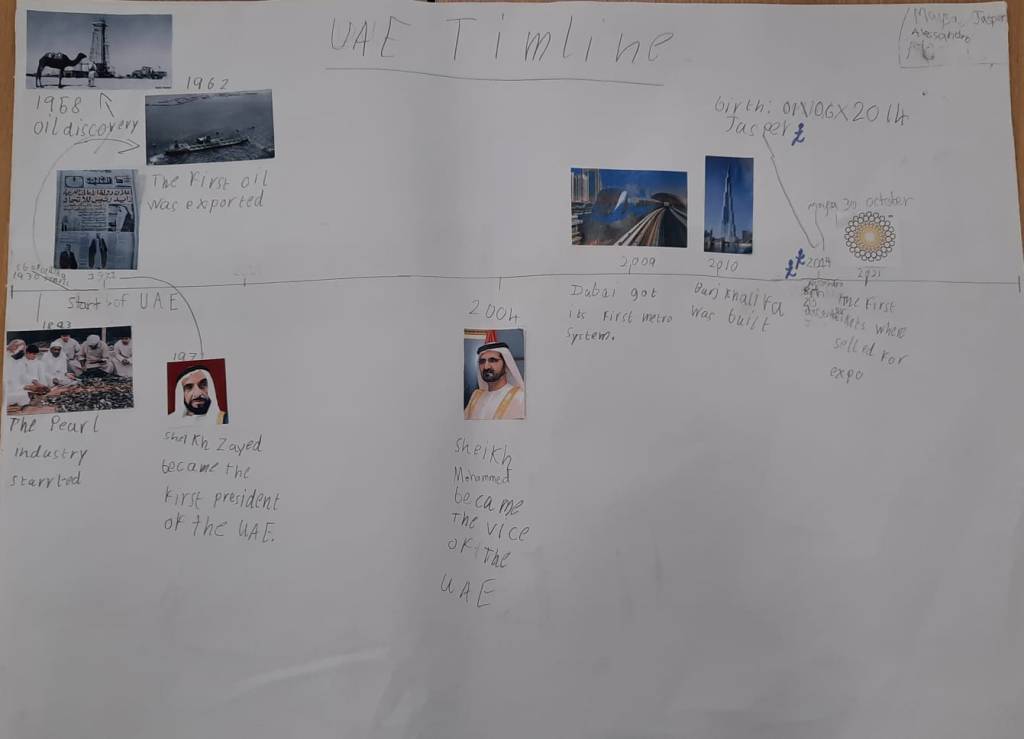
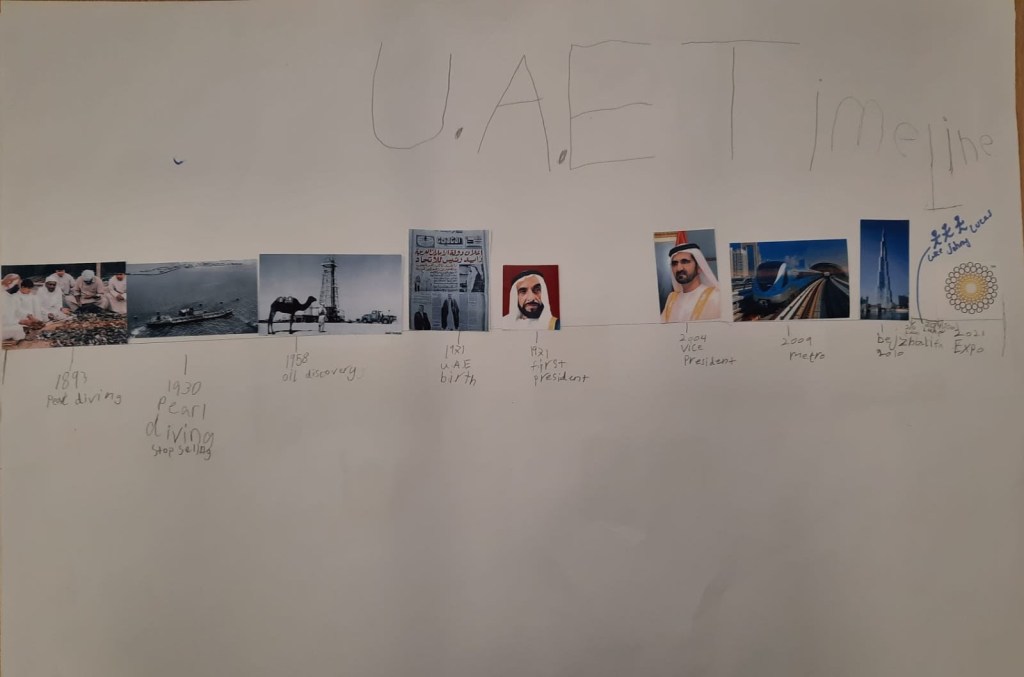
Now, the students created their own timelines of the UAE in groups! They were totally ready for this moment since they’d been working on their research and organisational skills. Using the multiple sources provided to them, they carefully gathered information, took notes, drew pictures and used photos to create a timeline that showed off their understanding of what went down in history. Making their own timelines was a powerful learning experience that allowed them to show what they learned in a way that really mattered to them. It was amazing to see them engaged and taking ownership of their learning.
As the student groups were busy creating their timelines, I couldn’t resist the chance to challenge them with thought-provoking questions to get those critical thinking skills flowing. I asked them to discuss which major event was responsible for the most significant change in the UAE’s history. The group discussions were lively and productive, and the students came up with some great insights.
Finally, it was time for the big reveal! Each group got to present their timelines to the class and showcase their hard work.
In Summary
Timelines are a powerful and versatile tool for teaching. They help students understand the past, not just memorize facts and dates. Complimenting primary sources with timelines can get our students excited about learning, becoming open-minded and inquirers as they explore and appreciate the history and development of a country over time, learn to accept, understand and appreciate different perspectives of people and the impacts of their actions. Also, timelines encourage critical thinking and give students the skills they need to become engaged and active citizens in their communities. With timelines, we can foster a love of learning that lasts a lifetime.
References
Breakstone, J. & Smith, M. (2013). Using library of congress primary sources for assessment. The TPS Journal, 6(1)
 Learn with Arush