In my previous article, “Creating Board Games to Improve Learning-part 1,” I shared how a board game helped my students consolidate their learning and grasp connections among related concepts at the end of a unit. Building on that, this article explores how the same game served as a tool for sparking inquiry, front-loading key vocabulary and managing information over-load in my 5th-grade classroom at the beginning of a unit.
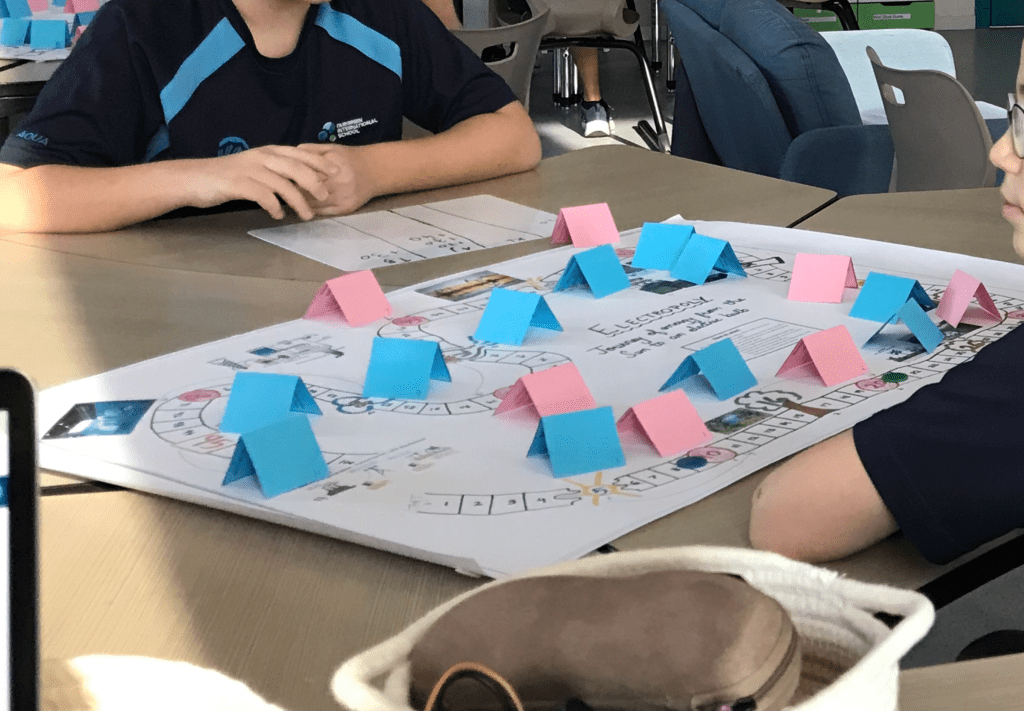
What’s in a game?
Using board games in our lessons aligns with our belief that children learn best by being active and involved. Instead of just listening, they’re building their knowledge through doing and exploring. By engaging students with the game, it encourages them to observe, analyze, and think critically which are essential skills for conducting inquiries and deeper learning. Recognizing the challenge of finding commercially available games tailored to specific curriculum goals, I crafted my own board game, “Electropoly,” inspired by the well-known Monopoly. But this game is centered around the transformative journey of energy from the sun to an electric bulb—a big idea that organizes and connects various smaller concepts within the unit on energy. This approach facilitates deeper understanding by engaging students personally with the game’s content and narrative structure while the visuals enhance comprehension and stimulate imagination. (Part 1 shares details about the creation of the game.)
Using the Board game for Provocation:
I am a big fan of using the Question Formulating Technique (QFT) developed by Dan Rothstein and Luz Santana (2011) for introducing research topics in my class. So, at the beginning of our unit of inquiry I decided to do the same. The QFT is designed to guide students through a systematic process of formulating relevant questions, starting with a Q Focus which can be a statement, an object or even a picture. In the first step of the protocol, students work in groups and use their divergent thinking skills to generate as many questions as possible from the provided focus. For an educator, choosing an effective Q Focus is critical, as it not only provides direction but also empowers students to independently pursue their inquiries later on.
Now, I needed a compelling provocation to ignite students’ curiosity and encourage exploration of energy concepts. And Ta-da! I knew exactly what to use as my Q Focus – ‘Electropoly,’ the board game I had previously utilized in my science class five years ago for a different purpose. With minor modifications, the game was ready to once again serve, this time as a catalyst for inquiry-based learning. This would be an opportunity to provide students with a structured yet engaging platform to explore energy concepts and generate their own questions.
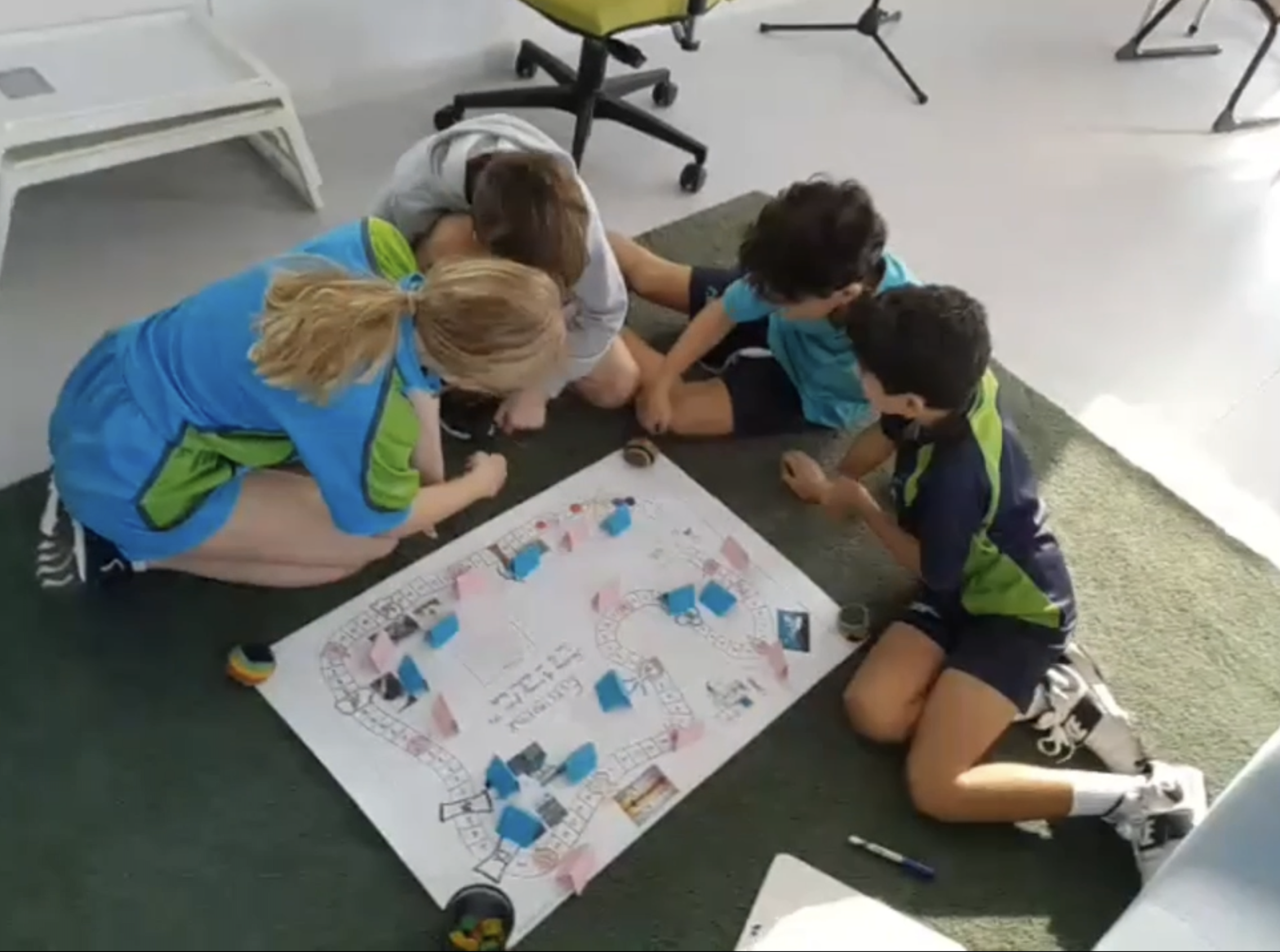
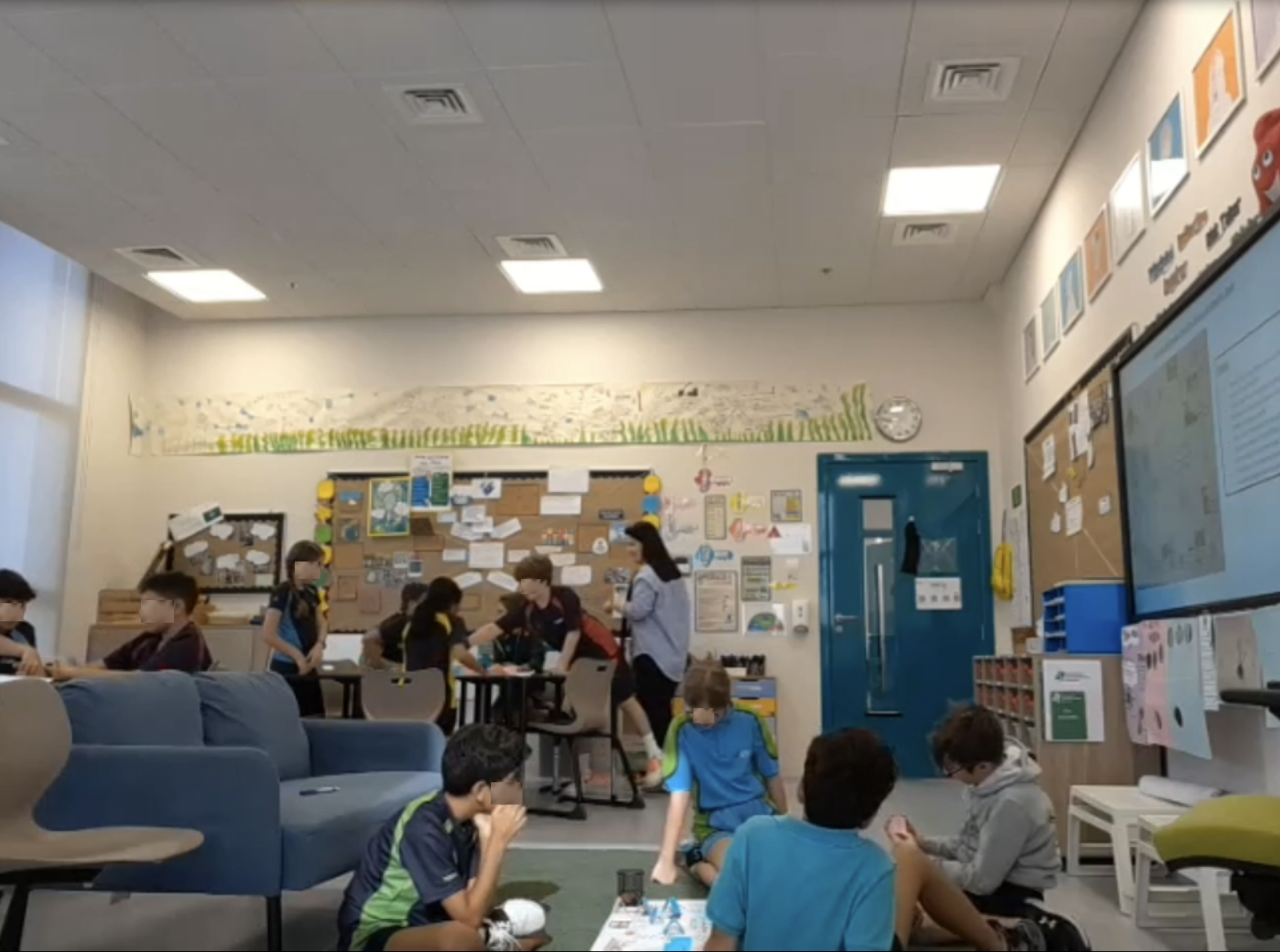
Grade 5 students at play in groups
A narrative stimulates inquiry:
Initially, I had concerns about using our board game as our Q Focus, fearing it might lead to overly broad questions and complicate the process of generating focused inquiries. However, those concerns faded, the moment we started playing, I saw light bulbs turn on above their heads, not just in the game but in real thinking! I saw conversations erupt; ‘I know what’s photosynthesis!’ ‘What would happen if there was no sun?’ ‘How come coal has so much energy to burn?’ ‘It’s funny that energy looks different in different things’. At the end of the game, I encouraged the students to generate as many questions and wonderings about the energy concepts they had just encountered on the game board. When developing our research questions, I noticed a notable ease among the students to come across thought-provoking questions, particularly open-ended ones about change, causation, connection, and impact, which stemmed from the narrative that was woven into the gameplay. The game no doubt refined their inquiries, and effectively guided them to explore connections between different elements on the board, which was enriching their thinking process.
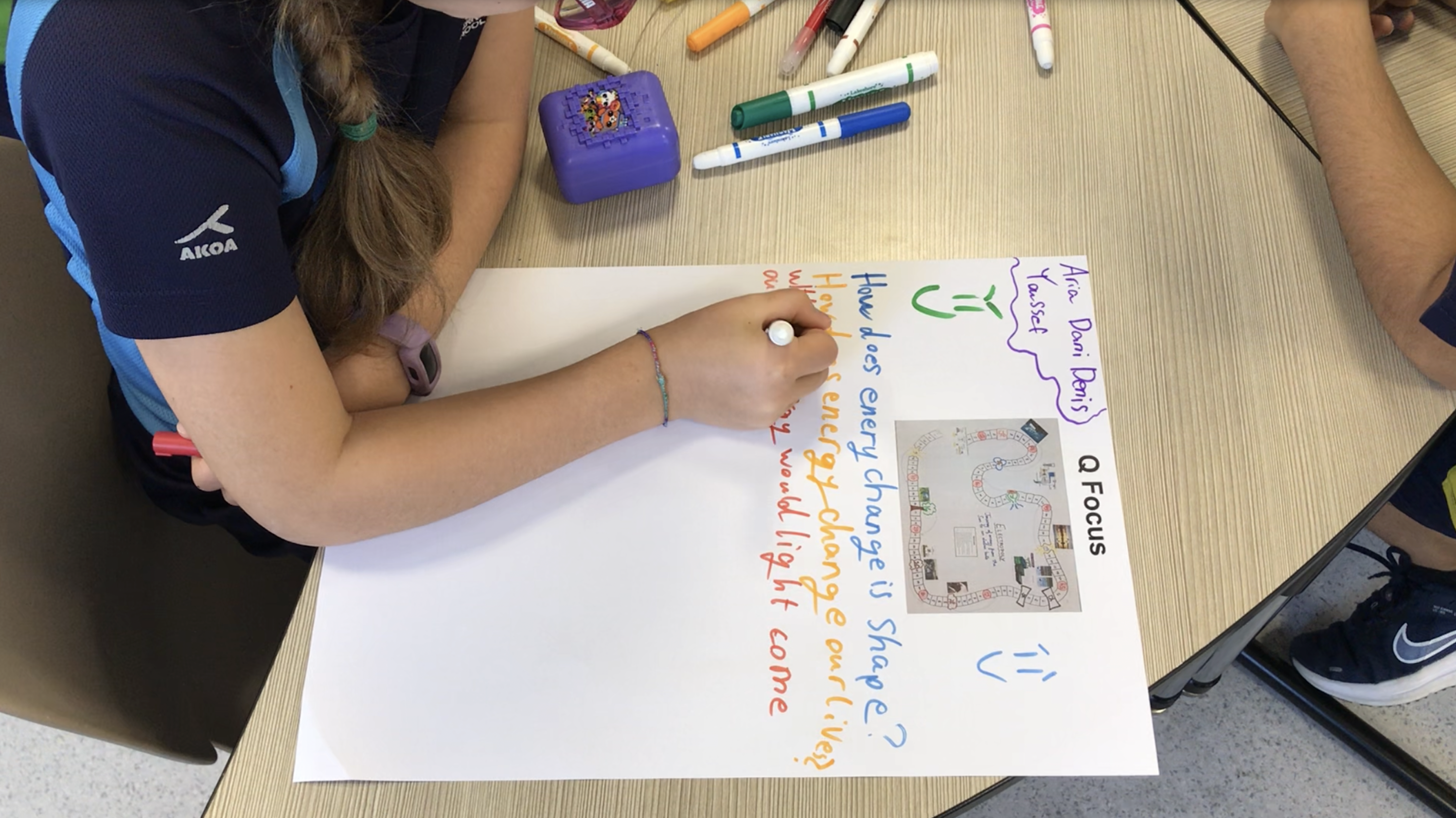
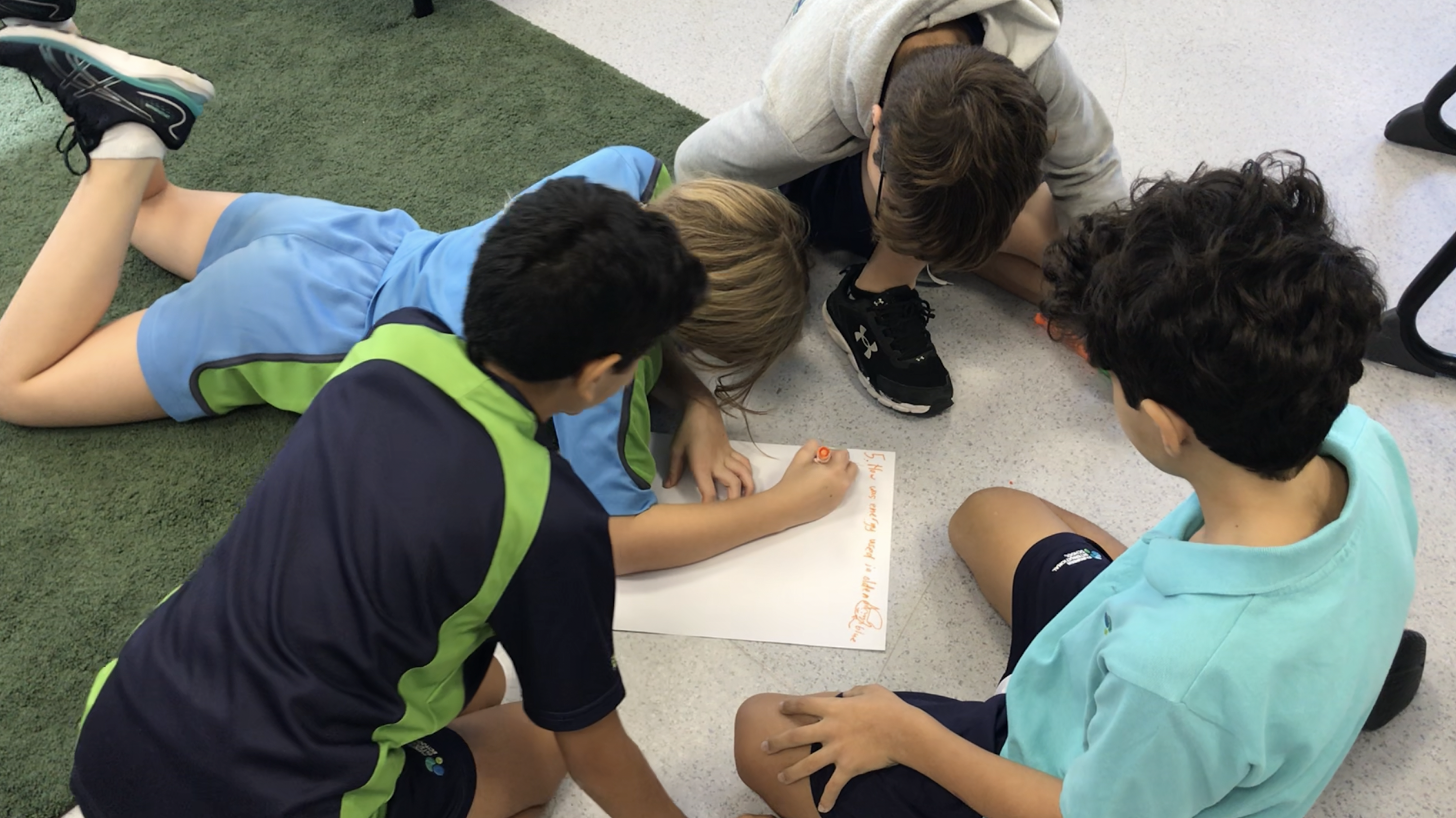
Students coming up with questions and recording them
‘Electropoly’ turned out to be the perfect spark; it not only made them more curious about how energy moves through a system but also helped them come up with some fantastic questions of their own. This game became a bridge, connecting them directly to the ideas we were going to explore about energy in the unit while having fun.
Front-load vocabulary:
And interestingly, as we journeyed through the game, the storyline taught the students some of the essential vocabulary they’d need for our energy unit. This deliberate effort to introduce important vocabulary before students engage in a lesson enhances their comprehension and ability to interact with the material effectively. The students were already chatting away using words like food chain, transformation, renewable and fossil fuels as if they’d known them forever.
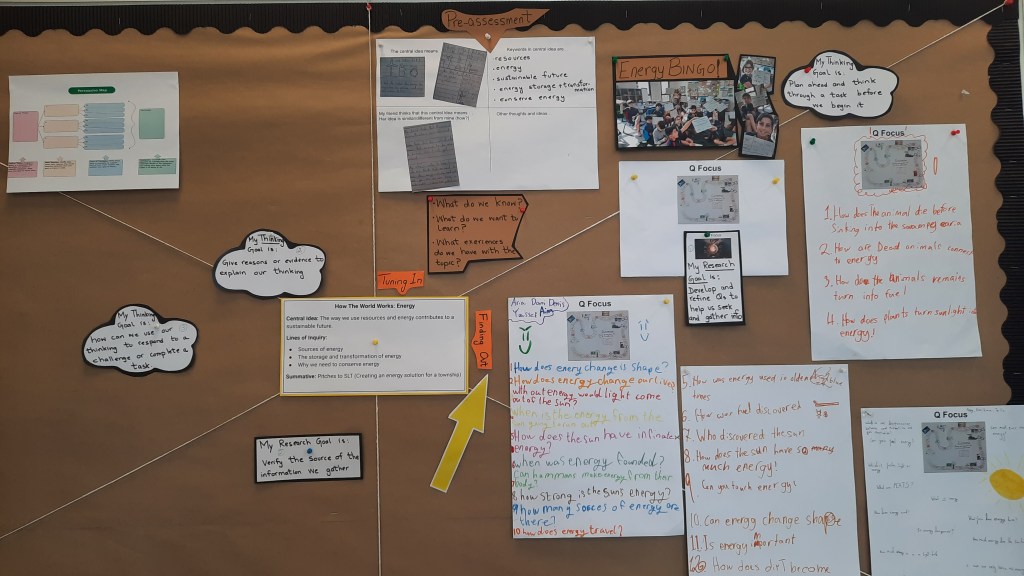
Manage Information Overload:
Crafting an educational board game involves an intricate process of aligning it with the lessons and the curriculum. This serves another important purpose – it breaks down complex information into an engaging, narrative-driven visual format, which helps to effectively manage the potential overload of facts. This strategic simplification allows students to navigate through the subject matter more easily without being overwhelmed with too much information. They can see the big picture and understand how things connect, like pieces of a puzzle.
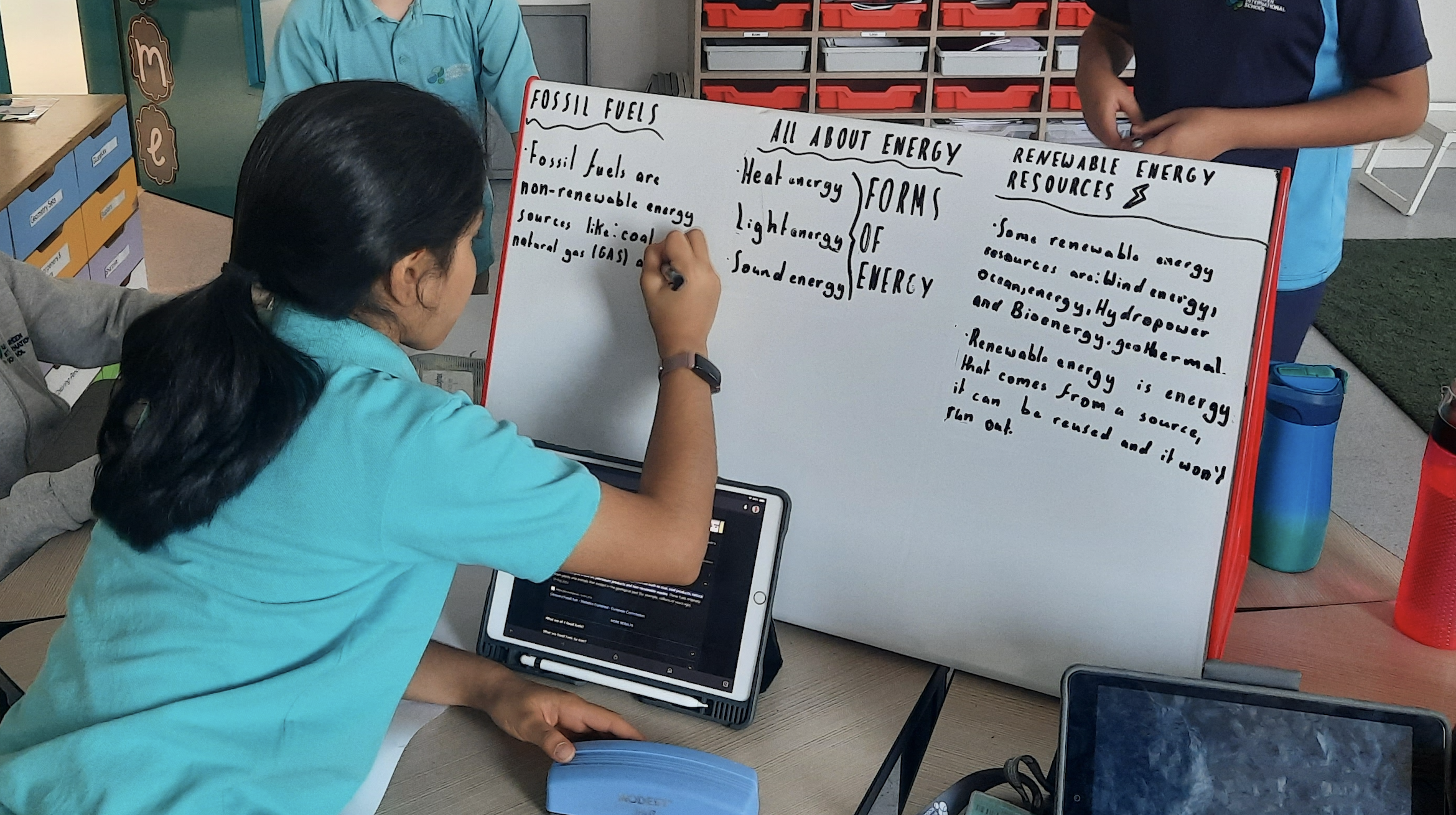
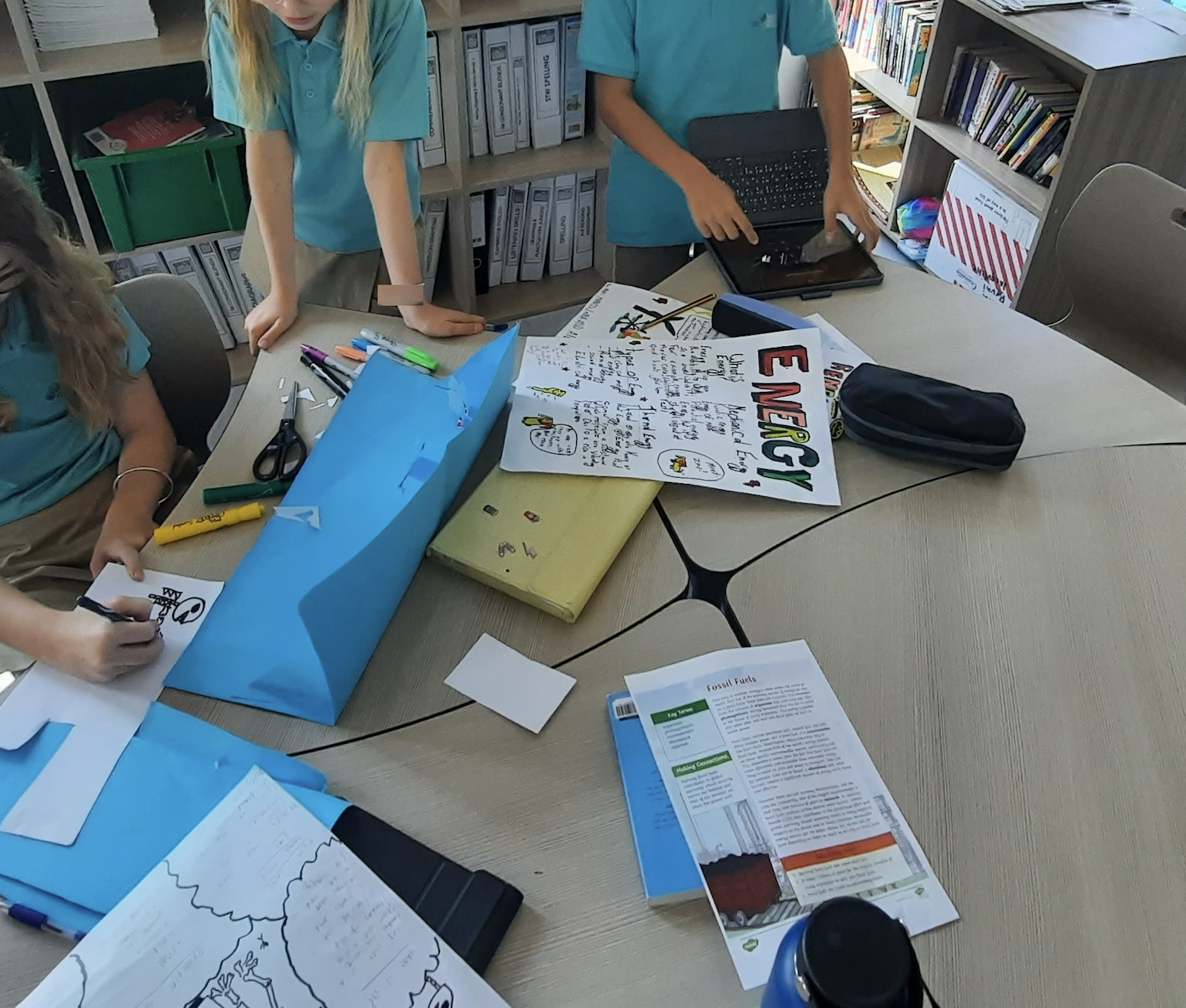
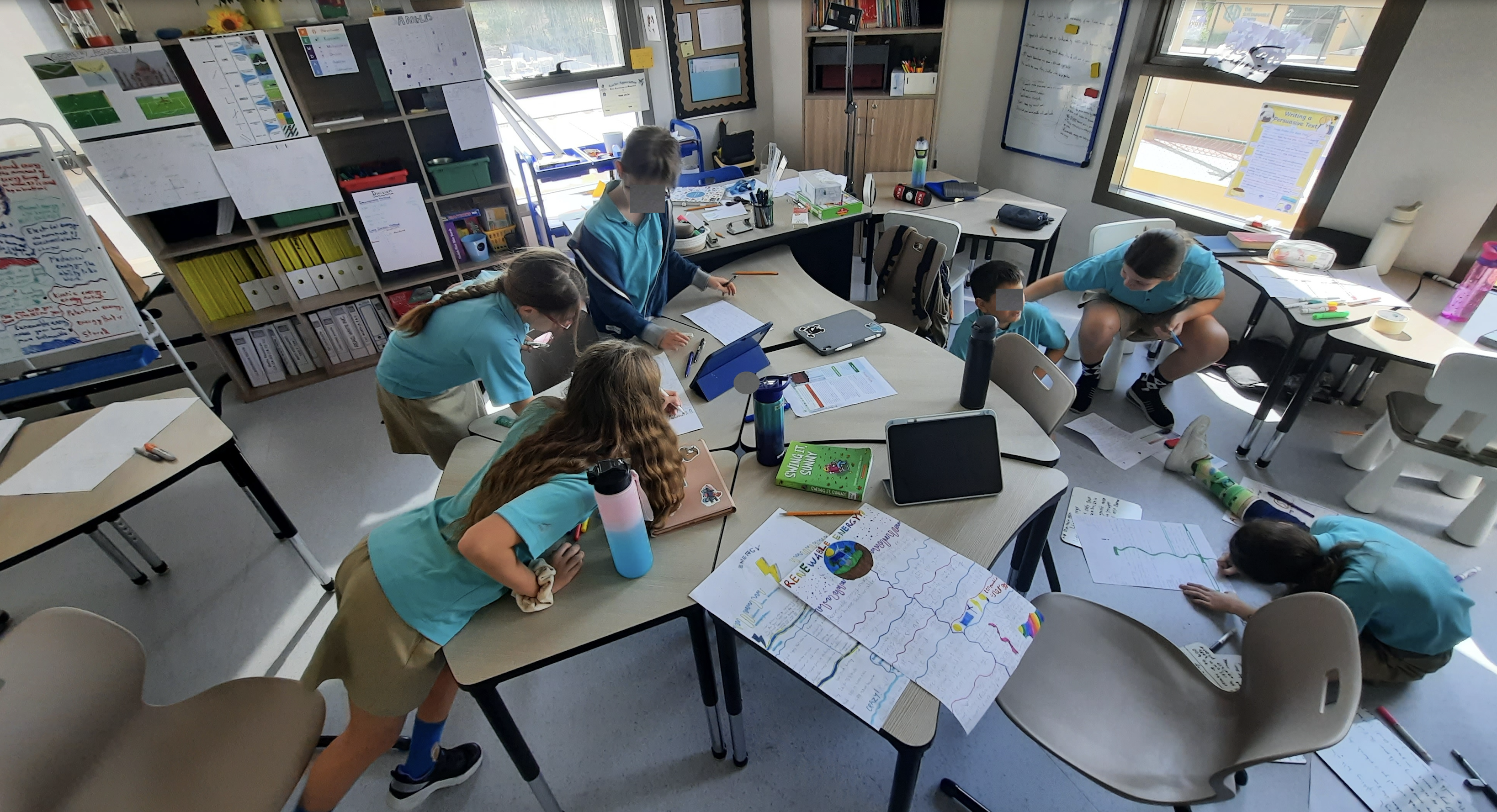
Students engaged in research
Addition of a useful resource:
Such games, once created as in this case, can become a valuable part of your teaching repertoire. They can be reused and adapted over time to fit different learning scenarios and objectives. This not only enriches the learning experience for students but also provides a creative and effective tool for educators to facilitate deep and meaningful learning.
Offering the game during learning rotations can provide a flexible learning option that can accommodate diverse preferences and needs within the classroom. Through multiple play throughs, students continue to explore new ideas and engage in meaningful discussions, making customized board games a flexible and valuable addition to educational strategies.
Conclusion:
As we wrap up, it’s evident that customized board games serve as incredible tools for sparking curiosity and deepening understanding among the students. By incorporating narrative elements and focusing on overarching concepts, these games encourage us to ask meaningful questions and explore interconnected concepts.
References:
Jan, H., & Heinz, M. (2012). Learning in or with games? Quality criteria for digital Learning Games from the Perspectives of Learning, Emotion, and Motivation Theory
Mitchell, I., Keast, S., Panizzon, D., & Mitchell, J. (2016). Using ‘big ideas’ to enhance teaching and student learning. Teachers and Teaching, 1-15. doi:10.1080/13540602.2016.1218328
Rothstein, D., & Santana, L. (2011). Make Just One Change: Teach Students to Ask Their Own Questions. Harvard Education Press.
Zhou, M., & Brown, D. . (2017). Educational learning theories: 2nd Edition
 Learn with Arush