This project began as part of my own journey to deepen my understanding of sustainability through systems thinking tools, which I learned from some of the most empathetic and future-focused educators at Compass Education. I wanted to see how everyday classroom challenges like lost stationery could be used as opportunities to cultivate responsibility, collaboration, and a systems perspective. The story below shows how my Grade 4 students and I explored this together, and what it revealed about the power of small actions to spark meaningful change.
I was tired. Tired of hearing the same chorus every day: “I don’t have a pencil.” “My glue stick’s gone.” “My marker doesn’t work!”

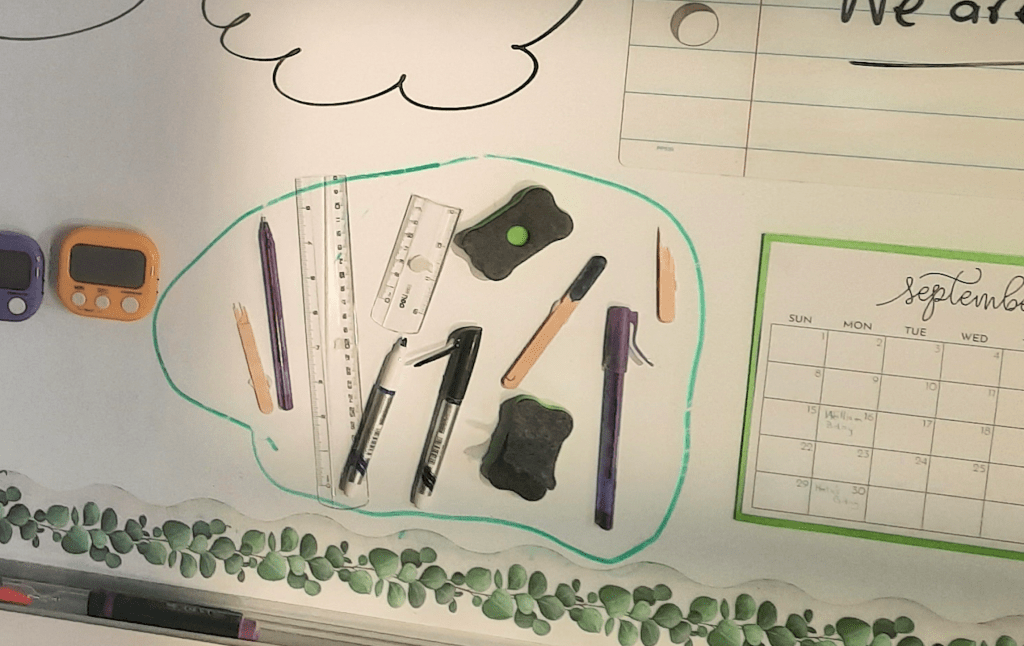
Above photos are from the classroom displaying stationery items-broken, misused or spoiled.
By home time, I’d be picking up half-chewed and even new pencils from the floor, glue sticks without lids, and markers left to dry out on the tables. Hmmmm… the life of a teacher, I thought. But deep down, I knew something had to change.
So I tried an experiment.
Living with Scarcity
At first, I kept reminding my students to take care of the stationery. Nothing changed. So I decided to stop ordering new supplies. That’s when the problems really began to show themselves.
Students had to wait for each other, arguments broke out over glue, and turn-taking became a daily struggle. I deliberately stepped back, staying a quiet spectator, because I wanted them to see the problem for themselves.
After a week of hassle, it was time to face it head-on. I gathered the class, placed some used supplies; broken and chewed pencils, dried glue sticks, uncapped markers in the center of the carpet, and asked: What’s going on? Why is this happening?
From Problems to Possibilities
This moment opened the door to new thinking. One suggestion captured the class’s attention — individualized pots of stationery, with each student responsible for their own set. The students were curious to see how long their supplies might last if they cared for them properly.
To make sense of the challenge and plan a way forward, we used the Pyramid Lite (VISIS) systems thinking tool. It helped us map our journey step by step:
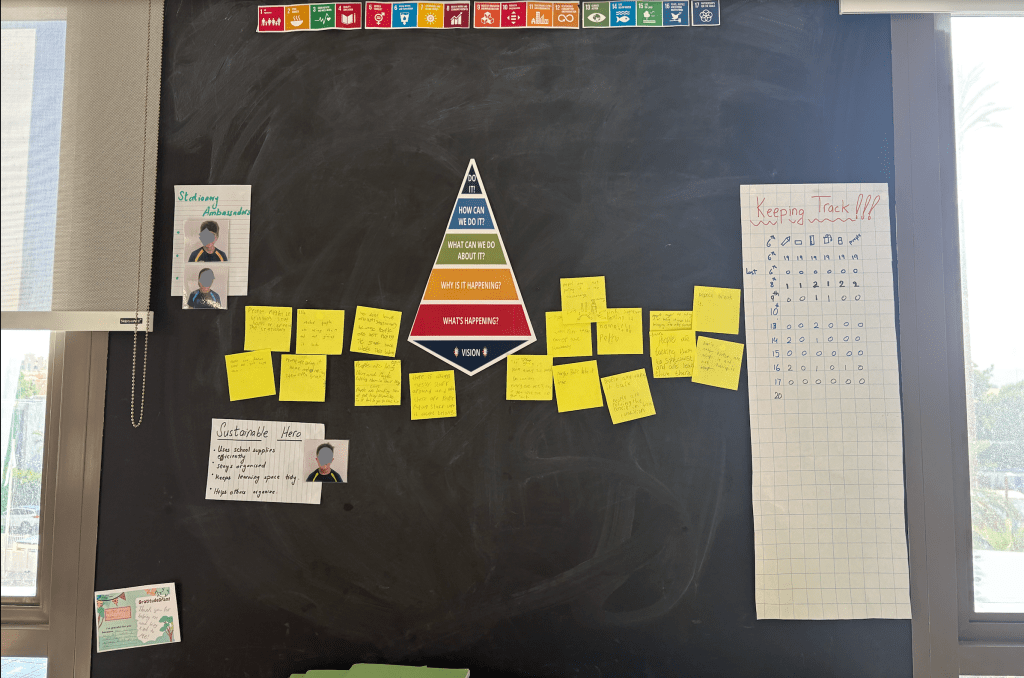
Classroom display above showing the stationery tracking sheet along-with pyramid LITE
- Vision – We began with the end goal in mind: to create a sustainable classroom where resources are valued and cared for.
- Indicators – Students identified the signs of the problem: chewed pencils, dried glue sticks, uncapped markers, and frequent shortages.
- Systems – They explored the reasons behind these patterns: lack of accountability, rushing at pack-up time, and the assumption that “someone else will fix it.”
- Innovations – One student suggested having individual stationery pots, and the class agreed this would be a practical solution.
- Strategies – We appointed student ambassadors to maintain a record of stationery usage and losses in our supply log.
The Pyramid gave structure to their thinking and transformed frustration into a shared vision for a sustainable classroom.
Using the Compass for Provocation
My class had been using the Sustainability Compass for some time. So once we had a plan, we zoomed out with the Sustainability Compass. Students quickly connected stationery to bigger systems:

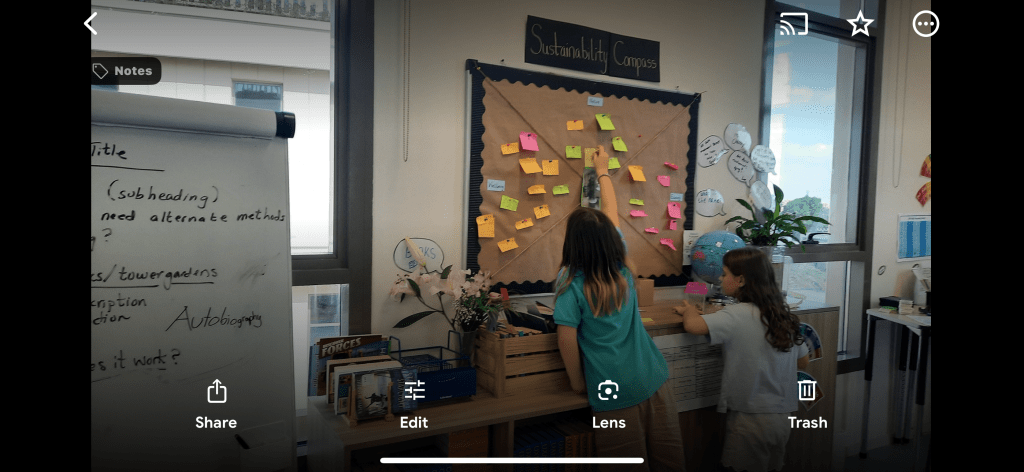
Classroom wall displaying the Sustainability Compass and students contributing to it.
- Nature – Wasting pencils is wasting trees, and wasting trees is harming our environment.
- Economy – If we buy too many, it wastes money, increase in school expense.
- Society – If someone hogs supplies, it’s unfair.
- Well-being – When I lose things, I feel stressed and unable to complete my work.
Suddenly, stationery wasn’t just “stuff” anymore. It was part of a wider system.
Using AMOEBA to Shape Roles
To build on this momentum, I introduced another systems thinking tool: AMOEBA. It helped us understand the different dynamics in our classroom, who were the early adopters, who needed encouragement, and who might resist at first.
Using this insight, I strategically appointed stationery ambassadors to monitor supplies, check caps, and gently remind classmates of their responsibility. We also created the idea of Sustainability Heroes to celebrate students who went the extra mile in looking after resources.
This blend of structure and recognition gave the project an appeal. Caring for stationery wasn’t just a task anymore, it became part of our classroom culture.
Taking Responsibility
With the system ready, each student was given their own basic set of stationery to use and care for. At the end of each day, the class inventory was recorded.
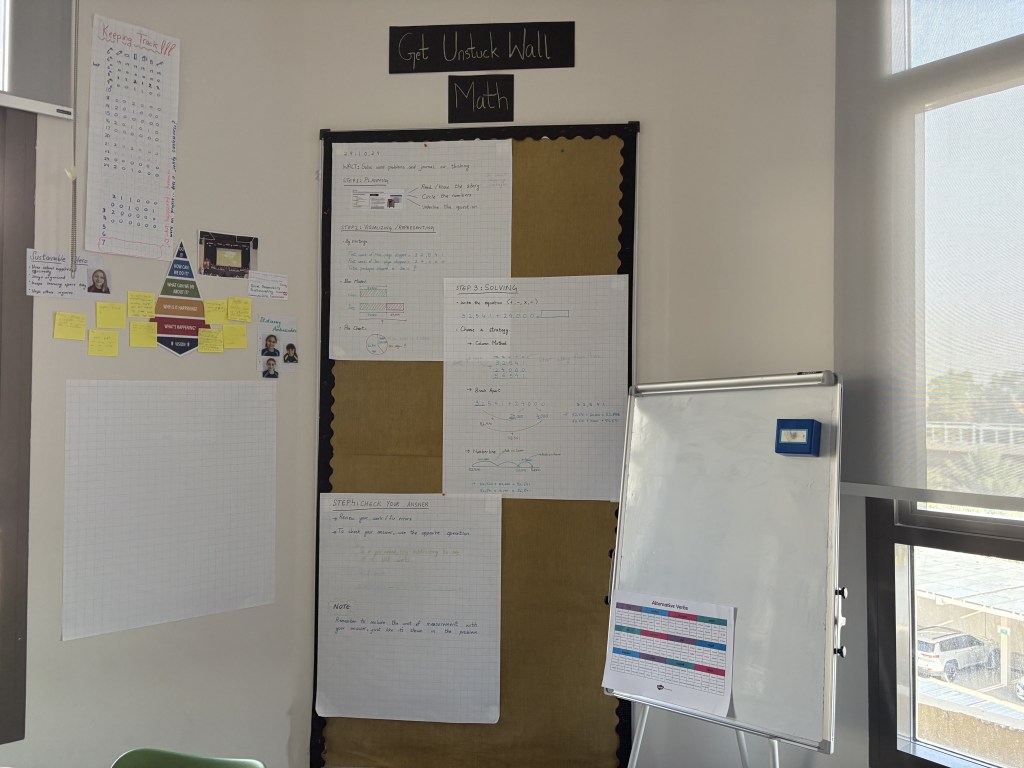
Photo showing the changed location of our sustainability journey wall-tracking continues into the 2nd month
At first, we were still “losing” items. When this happened, the responsible students, or the stationery ambassador would log it on our accountability chart and provide a replacement if needed. But we soon realized that most things weren’t truly lost, they were simply left behind somewhere in the classroom. Now, this was progress.
With daily reminders and the accountability chart on display, habits began to shift. Over time, fewer and fewer items went missing. Responsibility had become visible, shared, and reinforced until it stuck.
Math Meets Mindfulness
We collected data like researchers. Over three months, each child used around seven pencils, lasting about ten days each. We turned this into averages, charts, and reflections. Next time, I’d like to add a Behavior Over Time Graph to capture the trends even more clearly.
Sharing Our Story
The project culminated in a Primary Assembly where students shared their journey. They explained the Compass, presented their graphs, and told the story of how their habits had changed.
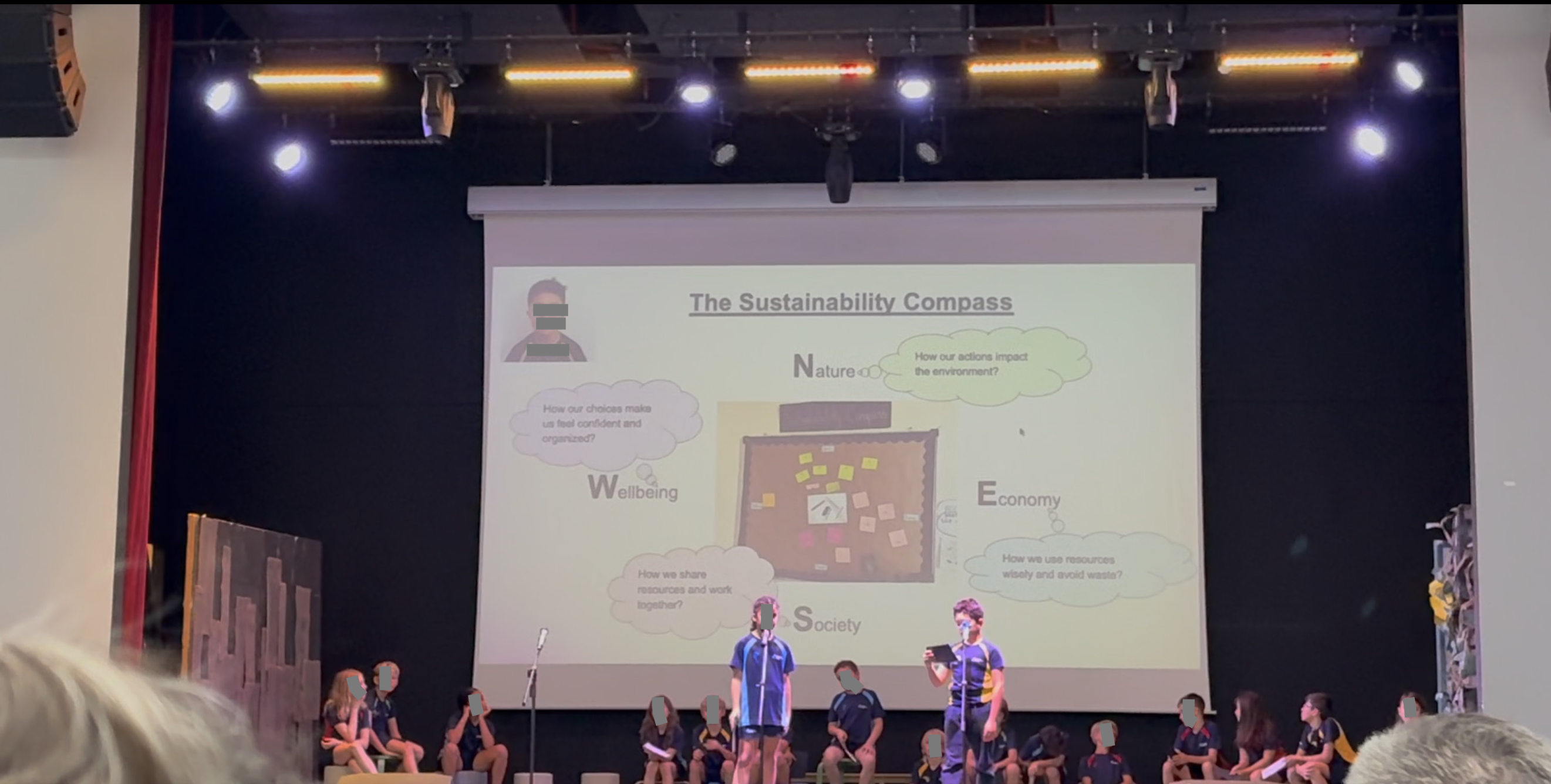

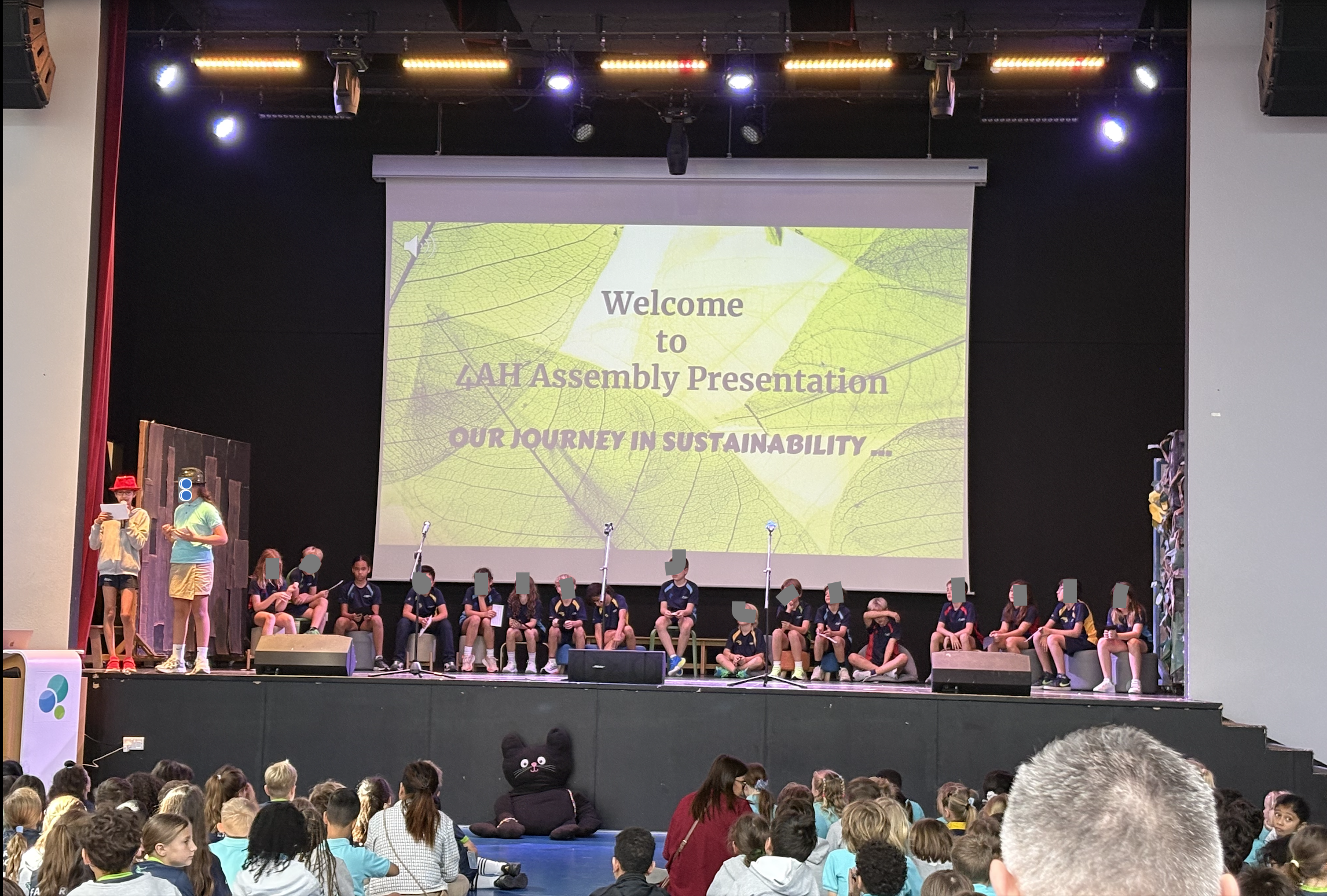
Class 4AH presenting their sustainability journey in the school assembly for parents and students-2025
A parent later told me, “My child won’t stop reminding me to close the cap of my pen. This project has taken over our house.” That’s when I knew our work had rippled beyond the classroom.
My Reflections
What began with frustration over lost pencils and dried-out glue sticks turned into something much bigger: a shift in culture. By slowing down, asking questions, and putting responsibility into students’ hands, I watched them grow into problem-solvers, collaborators, and leaders. The daily accountability, the sharing of data, and the chance to present their story gave them ownership in ways I hadn’t imagined at the start.
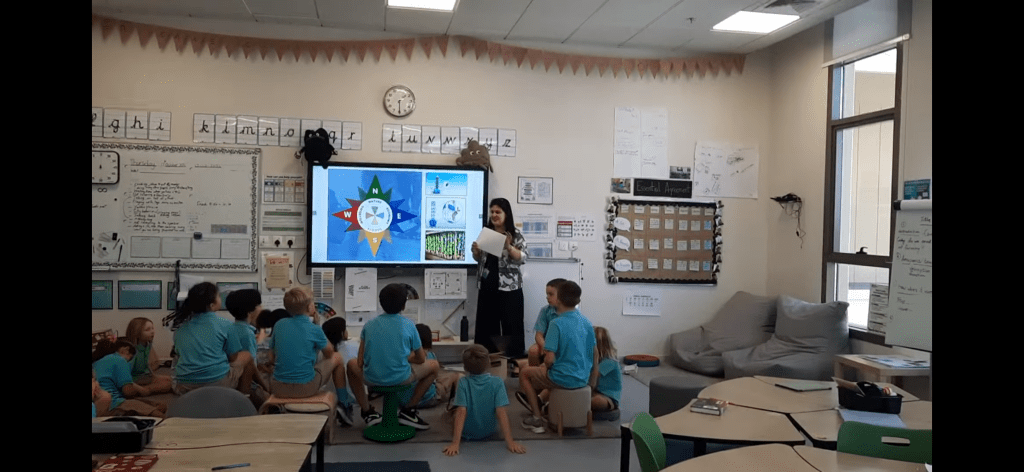
Teaching my favourite systems thinking took – the Sustainability Compass to my grade 4 students
If I could grow this further, I’d start the process earlier in the year and give students even more space to reflect on their own roles in shaping our classroom culture.
Sometimes, the road to sustainability begins not with a grand initiative, but with something as simple as a pencil.
 Learn with Arush